
Quick Highlights
- Location: Aba Tibetan & Qiang Autonomous Prefecture, Sichuan, China
- Elevation: 2,000–4,500 m
- Famous for: Colorful lakes, waterfalls, pristine forests, rich wildlife, Tibetan & Qiang culture
- Visit Duration: 1 day inside Jiuzhaigou National Park (park ticket valid for one day); 2–3 days recommended for the surrounding area.
- Best Seasons: Autumn (red leaves), Summer (full waterfalls), Winter (snowy landscapes)
Jiuzhaigou is a magical valley of crystal-clear lakes and cascading waterfalls, often called a “fairyland on Earth.”
Scenic Overview
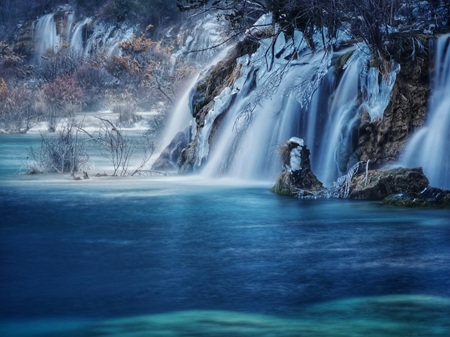
Jiuzhaigou National Nature Reserve is one of China’s most celebrated natural attractions. Lakes shimmer in shades of emerald, turquoise, and sapphire; waterfalls tumble from cliffs into tranquil pools; dense forests shelter rare wildlife. Its Y-shaped valleys, unique karst formations, and vibrant Tibetan-Qiang culture make it perfect for photography, trekking, and eco-tourism.
Name Origin & Myth
The name “Jiuzhaigou” comes from nine Tibetan villages in the valley: Shuzheng, Zechawa, Heijiao, Heye, Panya, Yala, Jianpan, Rexi, and Guodu—collectively called the “He Yao Nine Villages.”
Legend has it that mountain gods Dago and Wonosemo fell in love with the valley. When the evil demon Shemoza tried to separate them, Wonosemo accidentally dropped the “Mirror of Wind and Clouds,” which shattered into hundreds of pieces, forming the lakes scattered across the valley. Dago and Wonosemo became Jiuzhaigou’s guardians, and the colorful lakes became a signature of the region.
Culture & Religion
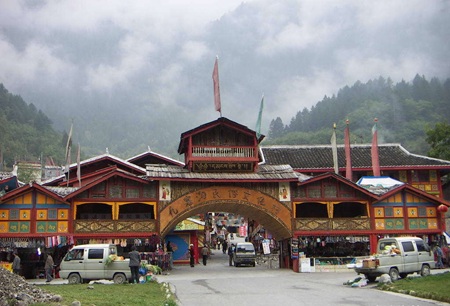
Ethnic Groups: Tibetan and Qiang communities
Religion: Bon and Tibetan Buddhism, preserved in 60 Bon temples
Traditions: Festivals, prayer wheels, mani stones, traditional clothing, music, and dance reflect centuries of cultural heritage. Jiuzhaigou’s villages and rituals allow visitors to experience authentic Tibetan culture alongside nature.
Nature & Wildlife
Forests cover over half the park (≈30,000 ha). Plants: 2,000+ species. Wildlife: 170 vertebrate species, 141 birds; protected animals include giant panda, golden snub-nosed monkey, takin. Jiuzhaigou emphasizes eco-tourism and protects pristine landscapes, air, and water.
Highlights & Key Attractions
| Feature | Description |
|---|---|
| Six Wonders | Emerald Lakes, Layered Waterfalls, Colorful Forests, Snow-Capped Peaks, Tibetan Culture, Blue Ice |
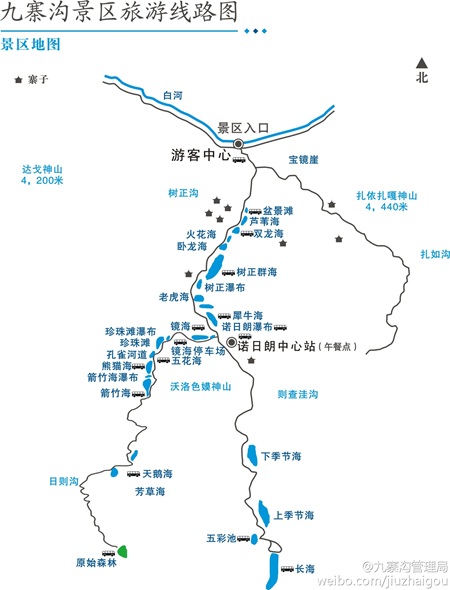
| Three Valleys | Shuzheng, Rize, Zechawa |
| Four Waterfalls | Shuzheng, Nuorilang, Pearl Shoal, Panda Lake High Falls |
| Three Beaches | Bonsai, Lovers’, Pearl |
| Lakes (Haizi) | 114 scattered throughout the valley |
| Tibetan Villages | Shuzheng, Zechawa, Heye, others |
Key Attractions: Five-Flower Lake, Five-Color Pond, Long Lake, Nuorilang Waterfall, Pearl Shoal Waterfall, Shuzheng Valley. The lakes change color with sunlight and season, offering a different spectacle at every visit.
Location & Transportation
Air: Jiuzhaigou Huanglong Airport (~90 min from Chengdu) is at high elevation, surrounded by complex mountainous terrain, with rapidly changing weather. Flight schedules are frequently delayed or canceled, and on-time performance is relatively low.
High-Speed Rail: Generally the most convenient and reliable way to reach Jiuzhaigou. Many visitors travel from Chengdu—or via Chengdu using a private transfer. During peak season, train tickets are in high demand, so booking well in advance is essential. Platforms include 12306 and China Train Guide.
Bus/Coach: If train tickets are unavailable, direct buses run daily from Chengdu Chadianzi Bus Station, Xinnanmen Bus Station, and Chengdu East Bus Station. Bus travel requires no transfers, total travel time is comparable to trains, and tickets are cheaper. Tickets can be booked via China Bus Guide.
Self-Drive: Mountain roads are well-maintained, but caution advised.
Visitor Tips
- Jiuzhaigou entrance tickets are valid for one day, which is sufficient for the vast majority of visitors. However, a small number of travelers may choose a two- or even three-day visit to better experience Jiuzhaigou’s scenery, culture, and ecological environment
- Altitude: Some spots reach ~3,000 m; rest and hydrate
- Environment: Do not pick plants or litter
- Best Viewing Seasons: Autumn red leaves, summer waterfalls, winter snow