
Nuorilang Waterfall Overview
Nuorilang Waterfall is located at the junction of Jiuzhaigou’s three main valleys—Shuzheng Valley, Zechawa Valley, and Rize Valley—at an altitude of about 2,365 meters. It is one of the widest high-mountain travertine waterfalls in China. The waterfall measures approximately 270–300 meters wide with a vertical drop of around 20 meters. Fed by the Nuorilang group of lakes above, the water pours over the cliff like flowing white hada scarves, crashing into the valley below with a deep, thunderous sound that leaves a lasting impression on visitors.
Formation of the Waterfall
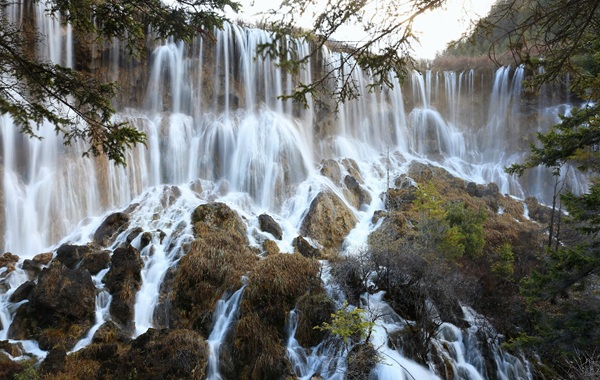
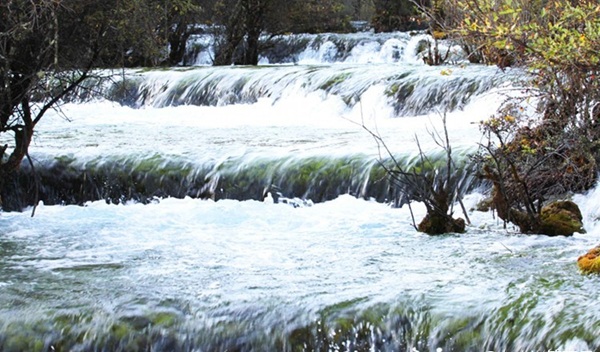
Nuorilang is a classic travertine waterfall, formed through a long geological process. As mineral-rich water flows over the limestone cliffs, calcium carbonate gradually precipitates and accumulates on the rock surface. Over thousands of years, these deposits build up layer by layer under the constant force of the water, shaping the broad, stepped cliff that defines Nuorilang today. This process is still ongoing, continually reshaping the waterfall, nearby cascades, and the crystal-clear pools at its base.
Scenery and Viewing Experience
From the viewing platform beside the road, visitors can enjoy a full panoramic view of the waterfall. During the day, sheets of white water shimmer against the dark cliff face, while fine mist rises into the air. In the early morning, sunlight often cuts through the spray to form rainbows across the valley, creating a scene that feels almost unreal.
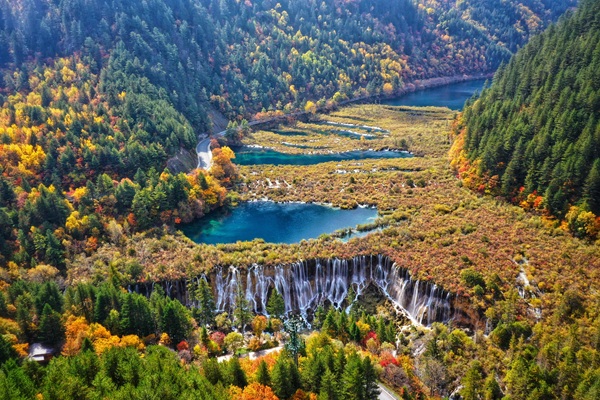
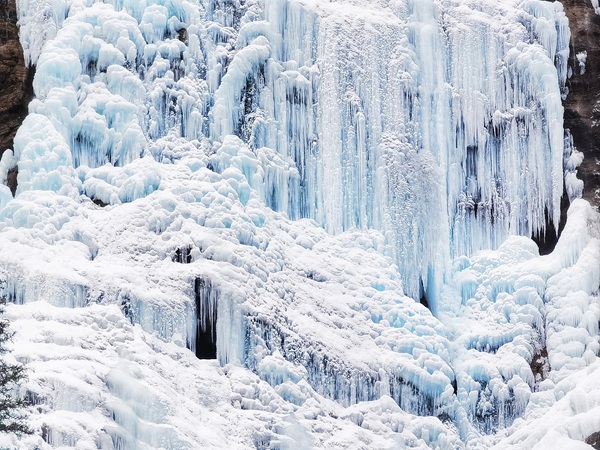
Seasonal changes dramatically affect the waterfall’s appearance. In spring, melting snow and increasing rainfall gradually restore water volume, and mist drifts gently through the surrounding forest. Summer brings strong, steady flow and frequent rainbows, making it one of the most visually powerful times of year. In autumn, golden and red foliage frames the waterfall, adding rich color contrast to the blue-green water. In winter, much of the waterfall freezes, forming spectacular blue ice and icicles, one of Jiuzhaigou’s famous winter wonders.
The viewing platform is built along the cliffside and is easy to access without steep climbs. For photography, the best angles are usually from the center of the platform or slightly to the left, where trees naturally frame the waterfall. A tripod is useful for long-exposure shots, especially in lower light.
Best Season to Visit Nuorilang Waterfall
Jiuzhaigou has a clear distinction between wet and dry seasons, and water volume changes are very noticeable at Nuorilang Waterfall.
- Wet Season (May–October): Rainfall and snowmelt significantly increase water levels. July and August represent the peak flow, when the waterfall appears at its most powerful and dramatic, with heavy spray and roaring sound. However, this period coincides with the rainy season, so visitors should be prepared for occasional showers.
- Transitional Months (April and November): Water levels are moderate, crowds are smaller, and conditions are comfortable. These months offer a good balance between scenery and travel ease.
- Dry Season (December–March): Winter brings minimal precipitation. Water flow decreases sharply, and some sections may freeze or split into thinner streams. While the waterfall is less impressive in scale, visitors can enjoy rare ice waterfalls, frozen pools, and snow-covered scenery.
Overall Recommendation: For most travelers, the best time to visit is late September to mid-October, when water volume remains strong after the rainy season and autumn colors enhance the landscape. If your main goal is to see the waterfall at its most powerful, July–August is ideal. Winter visits are best for those interested in ice scenery rather than flowing water.
Name and Legend
“Nuorilang” means “male god” in Tibetan and also conveys the idea of strength and majesty. According to legend, this site was once a weaving platform where a clever Tibetan girl taught her sisters to spin thread. A jealous local chief named Roza kicked her and her spinning wheel off the cliff, but was immediately swept away by a sudden flood. Over time, the platform transformed into today’s waterfall. This story adds a layer of cultural symbolism, and many visitors see the waterfall as a symbol of justice, courage, and natural power.
Visiting Tips
- Best Time of Day: Early morning or before noon for rainbows; winter mornings for blue ice and frost effects.
- Suggested Duration: About 1 hour for a casual visit; 1.5–2 hours for photography or slow exploration.
- Getting There: Around 6 km from the Jiuzhaigou entrance. Scenic shuttle buses are available, or you can walk 20–30 minutes along flat boardwalks.
- Practical Tips: Wear non-slip shoes, especially in winter. Bring rain gear in summer and warm layers year-round due to high-altitude weather changes.
Seasonal Highlights at a Glance
- Spring (March–May): Increasing water volume, misty atmosphere, fresh greenery.
- Summer (June–August): Strongest water flow, dramatic spray, frequent rainbows.
- Autumn (September–October): Best balance of water and color; ideal for photography.
- Winter (November–February): Frozen waterfall, blue ice formations, quiet and peaceful.
Nearby Attractions and Suggested Route
Many visitors combine Nuorilang Waterfall with Five Flower Lake and Pearl Shoal Waterfall for a classic half-day or one-day route. Well-maintained boardwalks connect these sites, and walking from Nuorilang to Pearl Shoal takes about 30–40 minutes downhill. With more time, adding Shuzheng Lakes or Long Lake creates a rewarding full-day experience.
Fun Extras
- The waterfall changes dramatically with the seasons—no two visits feel the same.
- The viewing platform offers the best full panorama—don’t forget your camera.
- Winter ice formations create natural sculptures unseen in warmer months.
- Low-angle sunlight produces the most vivid and dreamy rainbow effects.